
A boat’s chine is an integral part of its structure as it affects the way a vessel moves through the water. In this guide, we explore what a chine is, the difference between hard and soft chines, and their advantages and disadvantages. We’ll also look at what chine walking is.
What is a chine?
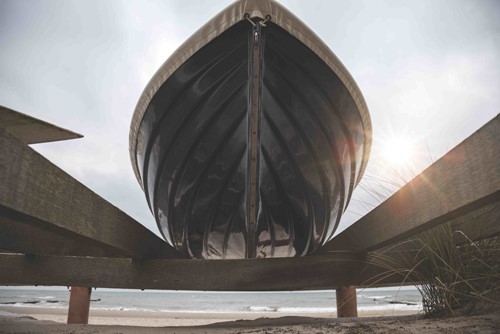
A chine is the line where two surfaces of a boat’s hull meet and is easiest to see on boats with flat or angled sides. Essentially, the chine is the curve along the side of the hull where the bottom becomes the side. Even if it’s rounded, this line is still referred to as the chine.
What does a chine do?
A boat’s chine has a few different roles. It impacts how the boat moves through water, affects stability and speed, and plays a part in how the boat handles waves. On planing powerboats, the chine helps the hull lift and provides stability at high speeds.
Types of boat chines
There are two different types of chines:
- Hard chine – A sharp, clear angle which is common on powerboats, aluminium boats, and some dinghies
- Soft chine – A rounded, smooth angle that’s found on many traditional sailboats
Advantages of a hard chine
A hard chine is where the hull bottom meets the hull side at a sharp angle. This chine type comes with several advantages, including:
- More initial stability – Hard chines offer more stability than soft chines as they resist rolling when they contact the water. This makes the boat feel steady when you step aboard or move around, which is a priority for many.
- Better planing performance – On powerboats and some high-speed sailboats, hard chines help the hull lift onto the plane quickly. This reduces drag and increases speed with less engine power, making it a popular choice for those who enjoy high speeds.
- Improved directional control – The angled surfaces of a hard chine grip the water, helping the boat move straight and turn predictably. This is especially useful when travelling at high speeds.
- Increased interior volume – As the sides can be more upright, hard-chined hulls often provide more space inside for storage, seating, or living areas.
Disadvantages of a hard chine
The main disadvantages of a hard chine on a boat are:
- Rougher ride in waves – Hard chines tend to slap against choppy water, creating an uncomfortable ride, especially at low speeds.
- Abrupt handling – As a rigid hull has sharp edges, the boat can catch suddenly when it heels or turns, making handling feel abrupt when compared to a soft-chined hull.
- Reduced secondary stability – Hard chines offer strong initial stability, but once the boat heels past the chine, stability can drop quickly.
- Increased drag at slow speeds – The sharper edges of a hard chine can increase resistance in the water when the boat isn’t planing, making displacement modes less efficient.
- Noisy – The flat surfaces and sharp angles of a hard chine can slap loudly against waves, which can be loud.
Advantages of a soft chine
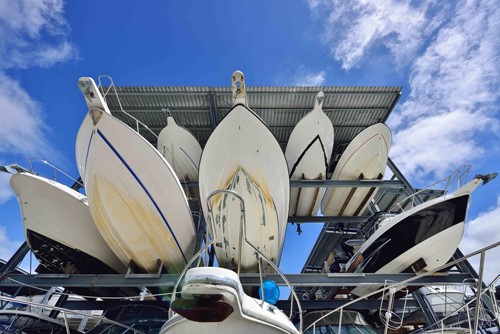
A soft chine, where the hull’s bottom and sides come together in a smooth curve, also has many benefits, including:
- Smoother ride in waves – The rounded shape of a soft chine cuts through waves gently, which makes for a more comfortable ride, especially for displacement boats.
- Better handling in rough water – A soft chine allows the hull to move smoothly from one angle of heel to another, improving control when the boat rolls or turns sharply.
- Predictable behaviour – As a soft-chined hull doesn’t have a sharp edge, the boat responds gradually to shifts in weight, wind, or steering. This is ideal for cruising sailboats and traditional designs.
- Reduced drag at low speeds – Water flows smoothly around a soft chine, which results in improved efficiency and makes it easier to maintain speed with sail power.
- Quiet – The rounder shape of a soft chine means less turbulence, which contributes to a calmer, more peaceful ride.
Disadvantages of a soft chine
The main disadvantages of a soft chine on a boat are:
- Less initial stability – Soft chines don’t provide the same stable feel as hard chines when the boat is upright, so the boat may feel less steady when stationary or in calm water.
- Reduced planing performance – On fast boats, soft chines don’t provide the same lift or sharp edges for grip in the water, making it harder to get onto plane, reducing a boat’s top speed.
- Less directional grip at high speed – The rounded shape of a soft chine can result in the boat sliding or yawing slightly in fast turns.
- Slightly lower interior volume – As a soft-chined hull’s sides curve outward gradually instead of being upright, there may be less space in the cabin or deck area.
- More complex construction – Soft chines can be harder to build in plywood, aluminium, or flat-panel composites, which can make them more expensive.
What is chine walking?
Chine walking is a side-to-side movement that occurs when a boat becomes unstable and begins rocking from one chine to the other. This tends to happen at high speeds when the boat is riding on a very small part of the hull, so even minor steering, weight, or trim changes can cause the boat to chine walk.
Chine walking happens when a boat is going so fast that its hull lifts out of the water, resulting in minimal contact between the vessel and the water’s surface. This means the boat becomes unstable and starts tipping, sometimes quite violently. Common causes of chine walking include poor weight distribution, a hull design that’s sensitive at high speed, a loose steering system, or travelling at excessive speeds for the conditions.
You can control potentially dangerous chine walking by reducing your speed, slightly trimming the motor down, improving weight balance, and ensuring your steering is tight and responsive.
Specialist boat insurance through Insure4Boats
Before you begin navigating the seas on your boat, you may want to consider getting specialist boat insurance.
Specialist boat insurance through Insure4Boats covers the damage and theft of your boat with optional personal accident, personal effects, and European cover. Find out more about specialist boat insurance through Insure4Boats or get a quick online quote today.
Please note the information provided on this page should not be taken as advice and has been written as a matter of opinion. For more on insurance cover and policy wording, see our homepage.