
Barnacles may just be small, underwater crustaceans. But they can be extremely problematic for boat owners and cause costly damage when left untreated. If you own a boat, understanding these marine organisms and how they can ruin your vessel is super important.
In this guide, we discuss what barnacles are and what causes them to grow on boats. We’ll also look at the issues they can cause for boatowners, detail some tips for removing them, and run through how to prevent them from attaching to vessels in the first place.
What are barnacles?
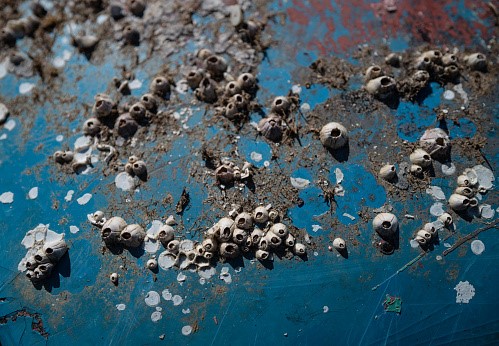
Barnacles are small marine crustaceans that live in saltwater and are related to crabs and lobsters. They have a hard shell, a cone-like shape, and eat tiny organisms they catch in the water.
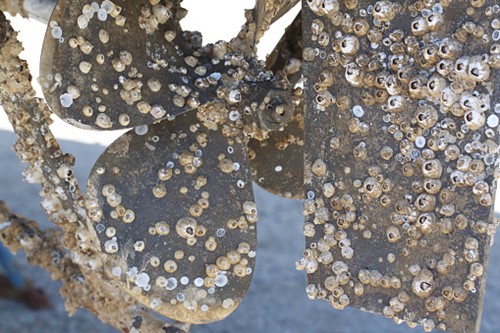
These crustaceans can be problematic for boat owners because they attach themselves to hard surfaces, including hulls, propellers, and rudders. This can cause a range of issues, including increased drag and reduced fuel efficiency.
What causes barnacles on a boat?
Boats that are left stationary in saltwater for long periods are more likely to attract barnacles than frequently used vessels. Leaving your boat stationary gives crustaceans more opportunity to attach. Both marinas and harbours are therefore high-risk areas.
This risk also increases in tropical areas, and during summer months in cooler climates, as warm water encourages barnacle growth. Warmer saltwater is also often richer in nutrients, which further encourages this growth.
Damaged or worn antifouling paint makes it easier for barnacles to attach to a boat, as it provides a rough surface for them to grip. Frequent maintenance is a must.
How do barnacles attach themselves to boats?
Barnacle larvae float through the water until they find a hard surface, such as a boat hull or propeller, to settle on. They then produce a strong natural adhesive, which helps them to stick. Once in place, they grow a hard shell to protect themselves, making them even harder to remove. It only takes a few weeks for barnacles to form, which is why stationary boats are at a higher risk than those that are constantly on the move.
Rough surfaces are perfect for barnacle larvae as there are grooves for them to grip onto. This means that boats with damaged paint, scratches, or worn coatings are ideal for attachment. A rough surface can also disrupt water flow, which means barnacles don’t have this to battle against when attempting to grip.
Once one barnacle attaches itself to an uneven surface, it’s easier for others to settle in around it. It’s incredibly important to protect your vessels against even a single barnacle.
Will barnacles ruin a boat?
Unfortunately, barnacles can ruin a boat if they’re left untreated for a long period of time. When barnacles gather on a vessel’s surface, they can increase drag and impact fuel efficiency. This results in slower speeds and reduced performance overall. Barnacles can also damage paintwork, gelcoat, and metal surfaces, which can be expensive to fix. Plus, they look unsightly and will likely ruin your boat’s aesthetic.
When barnacles settle on a boat, they can cause an increased risk of corrosion around propellers and underwater fittings. They could even create engine cooling problems if they block or clog up the vessel’s intakes. Severe barnacle infestations can increase maintenance and repair costs, so it’s important to prevent them from attaching to your boat where possible.
How to prevent barnacles on boats
Thankfully, there are easy ways to prevent barnacles from attaching to your boat and protect your vessel from these potentially damaging crustaceans. While maintenance and cleaning costs can add up, it’s a great investment when you consider the potentially huge expense of efficient barnacle removal.
- Apply high-quality antifouling paint, which discourages barnacles and other organisms from attaching. This coating also reduces the need for frequent scraping and underwater cleaning.
- Clean your boat regularly and carry out inspections when possible, especially if you leave it unused for long periods of time
- Use your boat frequently to reduce the risk of barnacles by making it difficult for them to attach and grow
- Consider lifting or dry storing your boat when it’s not in use, as this eliminates the risk of barnacles
- Check and clean propellers, transducers, and intake grates to remove barnacles and other organisms before they become problematic
- Schedule professional hull cleaning if your boat is often stationary in a high-risk area, such as a saltwater marina or harbour
Tips for removing barnacles from a boat
If you’re unlucky enough to have barnacles on your boat, you can try to remove them in the following ways:
- Use a wooden or plastic scraper, or specialised hull tools, to avoid causing potentially costly surface damage
- Try using a pressure washer to remove barnacles if there’s only a light or moderate buildup
- Chemical barnacle removers may be the best option if your boat has stubborn or heavy barnacle buildup that’s proving to be difficult to remove by scraping or pressure washing alone. They work by dissolving the hard shell of a barnacle, which makes it easier to remove
It’s important to remove barnacles as early as possible, as they become more difficult to remove when their shells harden over time. You should always wear gloves and eye protection to keep yourself safe, especially when using chemicals.
Avoid using harsh metal tools on fibreglass or painted surfaces as these can cause lasting damage. You should also consider cleaning the hull after barnacle removal and reapplying antifouling paint to help protect your vessel against barnacles in the future. Antifouling paint not only creates a smooth surface that barnacles find it difficult to attach to, but it also slowly releases active ingredients that prevent barnacles, algae, and slime from growing.
Professional barnacle removal and cleaning can be the best option for severe infestations or delicate surfaces. Professionals will have the best equipment, can recommend and implement the right removal method, and will take away the stress and hassle of carrying out the task yourself.
Specialist boat insurance through Insure4Boats
Even if you take great care of your boat, accidents can still happen. That’s why you may want to consider getting specialist boat insurance to help financially protect you and your boat.
Specialist boat insurance through Insure4Boats covers the damage and theft of your boat with optional personal accident, personal effects, and European cover. Get a quick online quote today.
Please note the information provided on this page should not be taken as advice and has been written as a matter of opinion. For more on insurance cover and policy wording, see our homepage.