
Cruising the UK canal system in a widebeam boat is a unique experience, offering plenty of space, a homely feel, and great stability on the water. But with their broader beam, these boats can’t navigate every stretch of canal. Careful route planning is always essential.
Here, we’ll look at what a widebeam boat is and focus on the advantages and disadvantages. We’ve also listed seven UK canals that are ideal for widebeam cruising, thanks to wide locks that can accommodate larger vessels.
What is a widebeam canal boat?
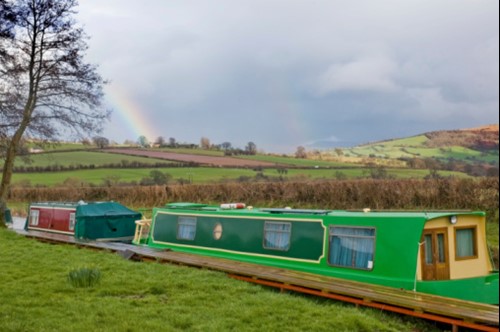
 As its name suggests, a widebeam canal boat is a canal boat that’s wider than a traditional narrowboat. A widebeam canal boat is usually around 12ft wide, with a typical range of 10ft to 14ft, and is designed to provide more interior space, comfort, and stability.
In comparison, narrowboats are around 6ft 10in wide as they’re specifically built to fit through narrow locks. Widebeam boats are popular for their spacious interiors and can look more like floating apartments rather than traditional narrowboats – they often feature full-size appliances, larger bathrooms, and more storage. The hull of a widebeam boat is usually flatter and more stable than that of a narrowboat, which makes them an excellent choice for families, anyone with pets, and people prone to motion sickness.
Disadvantages of a widebeam boat
While extra space, a homely feel, and more stability are significant advantages, there are a few disadvantages of widebeam boats to think about if you’re considering purchasing one.
1. Limited canal access
Widebeam boats are too big to fit through most UK canal locks, which are traditionally only 7ft wide. This limits your cruising options, as you can only cruise on wide-lock canals, rivers, or modernised stretches. Planning long trips can be tricky, and spontaneous cruising isn’t as easy as it would be with a narrowboat.
2. Mooring challenges
Finding suitable mooring options can be difficult with a widebeam boat, as many locks, moorings, and marina berths are designed for narrowboats. While widebeam moorings are available in some places, they’re typically hard to find and quite expensive.
3. Higher cost
Both the initial cost and maintenance costs of widebeam boats are usually higher than those of narrowboats. Running costs, including fuel, electricity, insurance, and mooring fees, are also higher due to the boat’s larger size and weight.
4. Reduced manoeuvrability
Their wider beam and heavier weight make widebeam boats less manoeuvrable in tight turns, narrow locks, and small basins. Docking, turning, and steering require more skill. And in some canals, it’s just not possible to perform these actions as the space isn’t available. This makes them less than ideal if you’re planning a canal boat holiday for beginners.
5. Transport and trailering
Transporting a widebeam boat by road is complicated and often requires a specialist vehicle and possibly specific permits too.
6. Maintenance
A larger hull area and additional interior space can increase maintenance and cleaning time for widebeam boat owners. Some narrow canal sections are hard to access for hull maintenance, meaning this must be planned around suitable marinas.
7 UK canals for widebeam boats
Canal options are more limited for widebeam boats than narrowboats in Britain. But there are some options in the UK that widebeams can generally navigate, as their locks, bridges, and channel widths are broad enough to accommodate them. When planning your route, always keep specific local restrictions in mind and check guidance carefully before cruising.
Leeds & Liverpool Canal
Many stretches of the Leeds & Liverpool Canal were built for commercial traffic, so they have wide locks suitable for widebeam boats. Some options include cruising from Liverpool to Wigan, a stretch with broad locks for larger vessels, and from Wigan to Leeds, which combines wide and narrow locks and requires careful route planning. Some northern sections still have traditional narrow locks, so a very widebeam boat may be restricted.
Bridgewater Canal – Northern England
The Bridgewater Canal was designed for commercial barges, so most locks are wide enough for widebeam boats to pass through. Not only does it have generous lock sizes, but the depth of this canal is usually sufficient for wider boats, too. Although it can get shallow close to the moorings.
Rochdale Canal – Northern England
The Rochdale Canal was initially built for commercial narrowboats and barges, so while many locks are narrow, some sections were later widened. Some stretches can accommodate widebeams up to 12ft, particularly near Manchester and the junction with the Bridgewater Canal.
Most of the canal’s locks are still narrow at around 7ft, so full-length widebeam boats cannot cruise the entire canal. For widebeam owners, the Rochdale Canal is best for short excursions near the Manchester area or junctions with wide canals.
Ripon Canal – North Yorkshire
The Ripon Canal was rebuilt to accommodate modern vessels, and some sections feature wider locks than many other UK canals. Locks were restored to handle beams up to 12ft, making it potentially suitable for narrow widebeam craft. Draft is shallow, typically around 3ft to 4ft, so it’s usually OK for most widebeam designs.
The Ripon Canal’s short length and limited connections mean it’s more of a local cruising or mooring option rather than part of a long-distance route for widebeam boats.
Grand Union Canal – England
The Grand Union Canal has variable lock widths, some of which are suitable for widebeam boats. Along the main line from London to Birmingham, many locks were widened to accommodate wide commercial vessels, typically 14ft wide, making it fine for widebeam leisure boats. However, several arms and branches of the Grand Union Canal are still narrow and not suitable for widebeams, such as the Leighton Buzzard Arm and Northampton Arm.
Widebeam boat owners can enjoy long stretches of cruising, especially along the main line between Birmingham and London. But you must plan routes carefully when branching off to narrower arms.
Regent’s Canal & Paddington Arm – London
The main Regent’s Canal locks are mostly broad enough to accommodate widebeam boats as they’re around 14ft wide. Paddington Arm locks are also suitable for boats up to around 12ft wide. Check specific bridge and tunnel limits before cruising along this waterway, and take extra care near historic structures. Regent’s Canal & Paddington Arm are ideal for urban widebeam cruising, but long-distance journeys require connections to the Grand Union Canal or other widebeam-friendly waterways.
Sheffield & Tinsley Canal and Sheffield & South Yorkshire Navigation
The Sheffield & Tinsley Canal has mainly broad locks which can accommodate beams up to 14ft and has a depth of around 4ft to 5ft, which is suitable for widebeams. The canal is short, so it’s mainly used for access to moorings and connecting to the wider Sheffield & South Yorkshire Navigation.
The Sheffield & South Yorkshire Navigation was designed for commercial vessels, so most locks are wide enough for widebeam boats. This option is excellent for more extended widebeam cruising, especially along the River Don to Sheffield, Rotherham, and Goole.
Things to consider when planning a canal route for a widebeam boat
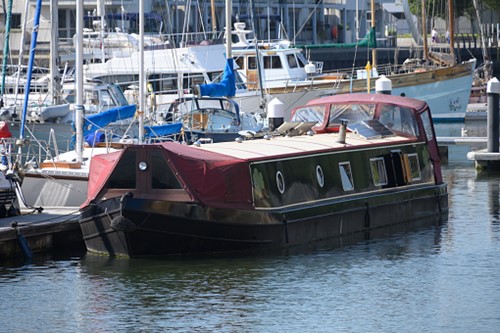
Planning a route for a widebeam boat in the UK requires extra care, as not all canals and rivers accommodate wider vessels. It’s important to consider:
- Lock widths: Most narrow canals have locks around 7ft, which makes them unsuitable for widebeam boats. Widebeam-friendly canals and rivers typically have locks over 12ft wide. Ensure you check the lock dimensions along your intended route before setting off. The Canal & River Trust publishes official dimensions.
- Beam of your boat: You must know the maximum width of your boat and always ensure there’s at least a few inches of clearance on either side of locks and under bridges. Remember that arm canals and minor routes may have locks that are too narrow for widebeams, even if the main canal is wide.
- Draft and water depth: Check the minimum water depth along your intended route, especially in shallow canals, rivers, or during dry weather.
- Mooring facilities: Due to their large size, widebeam boats need wider berths at mooring facilities. When looking for a suitable place to moor your boat, ensure your vessel will comfortably fit into the available berths.
- Canal and river restrictions: Keep in mind that some UK canals have maximum length restrictions, tidal limitations, and operational lock times. Always make sure you check these details when planning your trip.
- Historic and low-bridge areas: Many old industrial canals were not built for widebeam boats, and some historic locks may have been restored but not widened. Check dimensions carefully when planning your route.
Specialist widebeam insurance through Insure4Boats
Before your first trip in your widebeam, you may want to consider protecting it with specialist canal boat insurance through Insure4Boats.
Specialist canal boat insurance through Insure4Boats covers the damage and theft of your boat with optional personal accident, personal effects, and European cover. Find out more about specialist boat insurance through Insure4Boats or get a quick online quote today.
Please note the information provided on this page should not be taken as advice and has been written as a matter of opinion. For more on insurance cover and policy wording, see our homepage.